Search Icon
  • AU/NZ
  • AU/NZ
  • UK
Free Shipping on all orders
Recycling & Composting

Victoria’s FOGO Rollout Paves the Way for a Circular Future

Team Compost Connect, 05 December 2025
Victoria’s FOGO Rollout Paves the Way for a Circular Future

Victoria is taking decisive steps towards a circular economy through its state-wide rollout of Food Organics and Garden Organics (FOGO) collections. Under the Recycling Victoria policy and the Circular Economy (Waste Reduction and Recycling) Act 2021, all Victorian councils are required to provide access to FOGO or a local composting alternative by 2030. This marks a major shift in how Victorians manage organic waste, transforming food scraps and garden clippings into valuable compost that supports local agriculture and landscaping. 

To support households through the transition, the Victorian Government is encouraging residents to make small everyday changes that have lasting environmental benefits. One of its key messages, Keep rubbish out of your food and garden organics bin, underscores the importance of correct bin use to ensure high-quality compost output. The initiative aims not only to reduce landfill waste but also to build a culture of shared responsibility and practical climate action across communities. 

Victoria’s Vision for Organics Recycling

The Victorian Government’s Recycling Victoria: A new economy strategy sets ambitious waste reduction targets, including halving the amount of organic material sent to landfill by 2030, with an interim target of 20% by 2025. To achieve this, the state is investing in FOGO infrastructure, education, and processing capacity. 

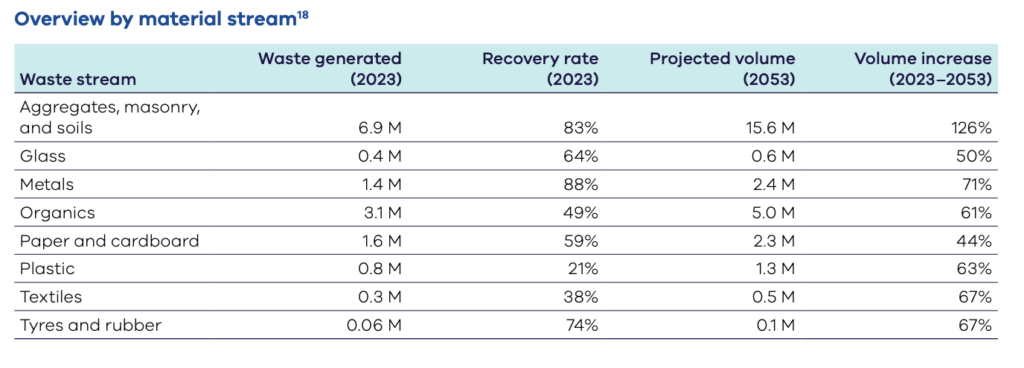
Part of this strategy is an $84 million grant funding, $254 million private infrastructure investment, and $40 million Commonwealth funding, to help councils introduce or expand services. According to the Investment Prospectus 2024, Victoria generated over 3.1 million tonnes of organic waste in 2022–23 with a recovery rate of 49%. Expanding FOGO services is expected to significantly increase this figure, supplying local composting facilities with the feedstock needed to create nutrient-rich compost. 

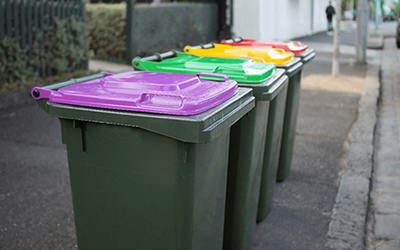
The push for a four-bin recycling system (glass, mixed recycling, general waste, and FOGO) aims to make councils (Victorian Government). By 2030, every Victorian household will have access to a green-lid FOGO bin, marking a major step toward a state where organic waste is seen as a resource, not rubbish. 

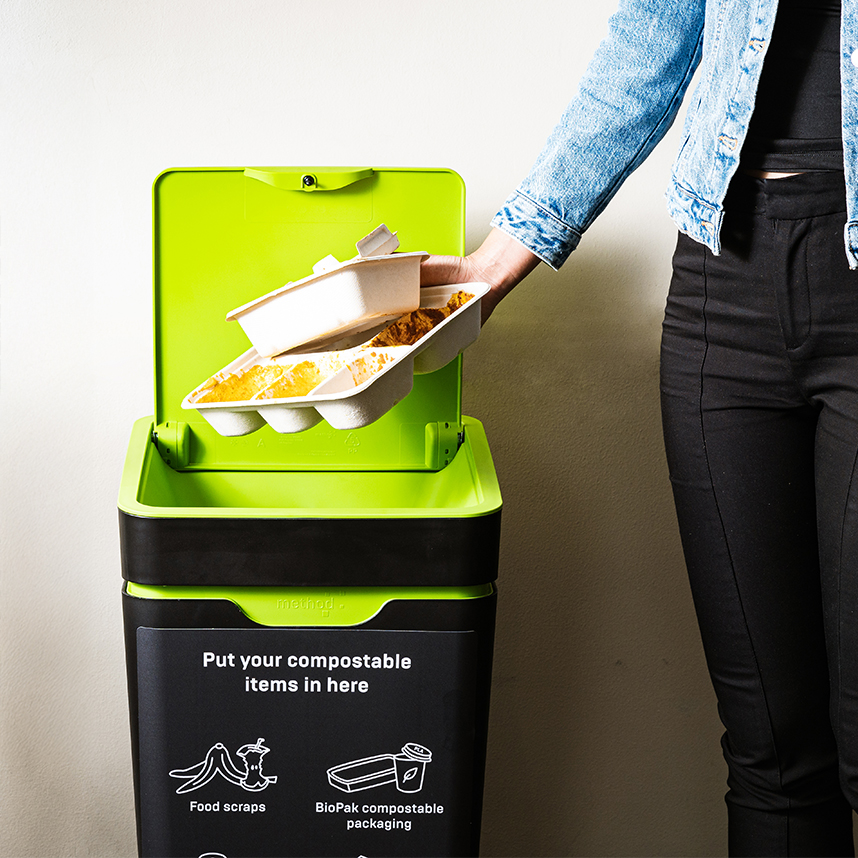
Person disposing compostable trays into a green-lid compost bin.

Progress Across Victorian Councils

Across Victoria, councils are at various stages of implementing FOGO services, each adapting the program to local conditions. Some municipalities have fully established kerbside collections, while others are piloting new systems or expanding existing garden organics programs to include food waste.  

City of Port Phillip  

Port Phillip is among the early adopters of FOGO in metropolitan Melbourne. Its FOGO program has already helped residents divert thousands of tonnes of food and garden waste from landfill. The collected material is processed locally and turned into compost used for parks and gardens across the city. The council has also run a strong education campaign, highlighting correct sorting behaviour and contamination prevention.  

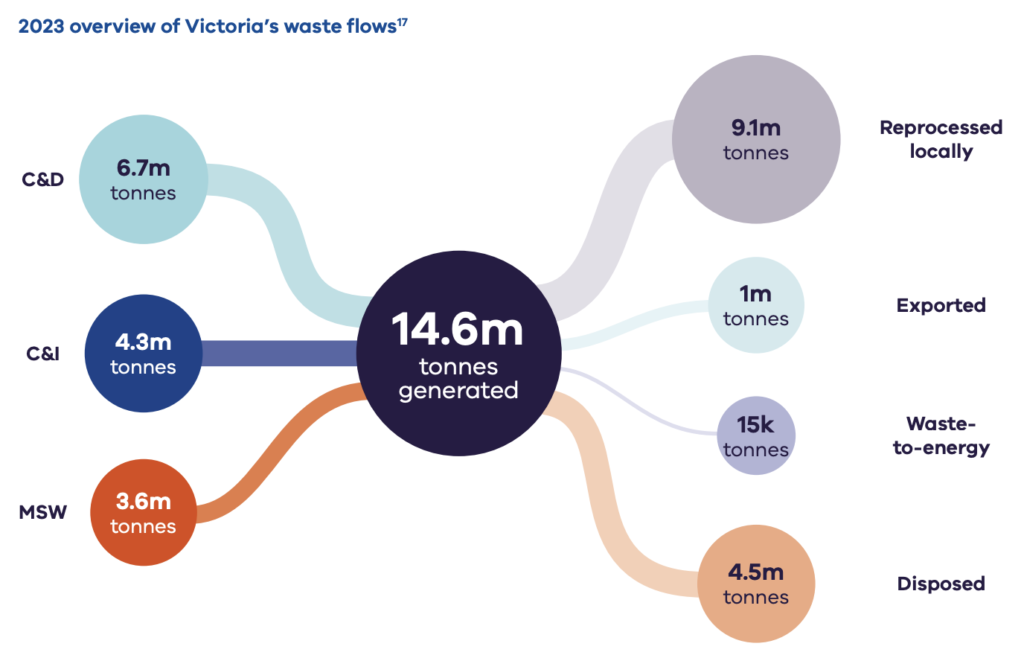
Infographic showing Victoria’s 2023 waste generation and outcomes.

Wyndham City Council  

Wyndham is preparing for the full rollout of its green-lid bin service to all households by 2026. The program has already diverted significant quantities of organic material, with plans to expand collection routes and increase processing capacity. The council’s phased rollout demonstrates how large urban municipalities can scale organics recovery through clear communication and staged implementation. 

Manningham and Whitehorse Councils  

Manningham’s FOGO service has focused heavily on contamination control, providing residents with kitchen caddies and AS4736-certified compostable liners. Similarly, Whitehorse City Council provides simple step-by-step guidance on proper bin use, including what can and cannot go into the FOGO bin. These councils showcase how local education efforts can reduce contamination and improve compost quality. 

Regional Leadership: Macedon Ranges Shire Council  

In regional Victoria, Macedon Ranges has successfully introduced FOGO services that cater to rural households. Their approach includes flexible collection frequencies to support participation in less densely populated areas. The Recycling Victoria Policy also sets out drop-off service guidelines aside from the collection services by 2030 to improve its access for all Victorians. This highlights how regional councils, along with the state government, are innovating to ensure the program reaches every Victorian household. 

Table showing waste generation and recovery rates by material in 2023.

Learning from The Challenges

While progress is promising, Victoria’s FOGO rollout faces several challenges. Contamination remains one of the biggest issues–non-compostable materials such as plastic bags, glass, and non-certified packaging can compromise the composting process. Sustainability Victoria’s campaigns continue to stress the importance of keeping rubbish out of green-lid bins to maintain compost quality. 

Another ongoing discussion concerns compostable packaging. The Victorian Government has proposed excluding compostable packaging from FOGO collections, a move that has raised industry debate. While this aims to reduce contamination, it may also limit opportunities for circular packaging solutions that are compatible with industrial composting. 

Infrastructure capacity is another hurdle. As more councils adopt FOGO, composting and processing facilities must expand to handle increased organic waste volumes. State funding and partnerships with private composting operators will be essential to meet growing demand. 

Despite these challenges, the early outcomes are clear: FOGO participation is rising, contamination rates are improving in areas with strong education, and local councils are showing how policy, funding, and community engagement can combine to build a circular future for Victoria.

Building Community Engagement and Behaviour Change

A successful FOGO rollout depends not only on infrastructure and regulation but also on strong community participation. Sustainability Victoria’s Small Acts, Big Impact program plays a central role in helping households adopt the right habits, providing simple guidance on how to reduce food waste, store kitchen scraps, and keep contaminants out of green‑lid bins. 

Local councils have also invested in education and community engagement. Many provide kitchen caddies, run workshops, partner with schools, and create multilingual educational materials to help households understand the benefits of composting. Councils such as Manningham and Whitehorse demonstrate how tailored education programmes reduce contamination rates and encourage long-term behaviour change. By combining simple messaging, practical tools, and ongoing support, councils are building a culture where FOGO becomes a habit for Victorians. 

The Road Ahead for Victoria’s FOGO Rollout

As Victoria moves towards its 2030 target for universal FOGO access, the foundations for a circular organics system are steadily taking shape. Many councils have already transitioned from garden‑only collections to full food and garden organics services, and state investment continues to expand processing capacity across metropolitan and regional areas.  

Looking ahead, collaboration between government, councils, industry, and communities will be essential, in line with the state’s long‑term goal to halve organic waste sent to landfill and strengthen demand for products made from recycled organics. Increasing processing capacity, improving data transparency, and supporting innovation in compostable materials will help the system grow sustainably. Education campaigns will remain crucial in reducing contamination and encouraging households to take full advantage of FOGO services. 

Victoria’s commitment aligns with the national objectives set out in Australia’s National Waste Policy Action Plan, which emphasises reducing waste, boosting resource recovery, and fostering a circular economy by 2030. With consistent policy, community involvement, and continued investment, Victoria is well-positioned to become a national leader in organics recycling, turning everyday food scraps into a valuable resource that benefits farms, gardens, and the environment. 

Recommended Reads

Queensland’s Composting Momentum: FOGO Gains Ground Across Councils
Recycling & Composting
Queensland’s Composting Momentum: FOGO Gains Ground Across Councils
Team Compost Connect, 24 July 2025

While the FOGO rollout in Queensland has faced significant delays and shortcomings, the...

Continue reading
Washington, DC’s Smart Bins Start a New Era for Urban Composting
Recycling & Composting
Washington, DC’s Smart Bins Start a New Era for Urban Composting
Team Compost Connect, 03 August 2025

Washington, DC has taken a significant step towards sustainability with the launch of...

Continue reading
New Zealand's Waste Policy Evolution: Progress and Recent Reversals
News
New Zealand's Waste Policy Evolution: Progress and Recent Reversals
Team Compost Connect, 16 January 2025

In recent years, New Zealand has undertaken significant initiatives to address waste management...

Continue reading
Compostable Packaging: Sorting the Myths from the Facts
Recycling & Composting
Compostable Packaging: Sorting the Myths from the Facts
Team Compost Connect, 19 February 2025

The debate around compostable packaging is heating up! NSW has already banned compostable...

Continue reading